Abstract
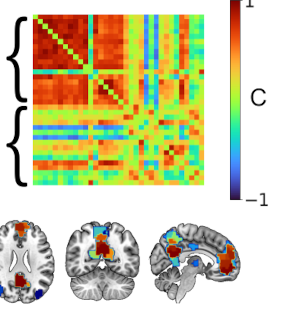
Severe brain injury poses significant clinical challenges, including early and accurate prognostication of neurological outcomes. Current assessment tools are limited in their predictive power, leaving many patients in a "gray zone" of uncertainty. While disorders of consciousness (DoC) induced by brain injury are traditionally associated with structural brain damage, emerging evidence suggests that they are primarily driven by a withdrawal of excitatory synaptic activity across key cortical and subcortical regions, which can be captured through the dynamic analysis of resting-state brain activity. This study investigates the temporal dynamics of brain connectivity, shortly after severe brain injury (average of 13.9 days from onset), hypothesizing that acute DoC are marked by a global reorganization of functional connectivity and a shift toward less informative brain states, with distinct patterns emerging based on the underlying injury mechanism. Using functional magnetic resonance imaging (fMRI), we identify six distinct brain states across severely brain injured patients and healthy controls. These states, when sorted by decreasing entropy, span a continuum from state 1, characterized by high entropy, widespread positive long-distance coordination, and high global connectivity, predominantly observed in healthy controls, to state 6, which exhibits low entropy and minimal functional connectivity, and is predominantly associated with acute DoC. We demonstrate that the probability of occurrence of the more complex brain state correlates with improved neurological recovery at 3 months, as assessed by the Coma Recovery Scale–Revised (CRS-R). Hence, we were able to train a classifier based on brain state dynamics that achieved an accuracy of 78.5% in predicting patients' recovery potential (AUC = 0.864). Overall, our findings suggest that dynamic brain connectivity, particularly the entropy of brain states, can be a reliable early predictor of recovery from severe brain injury, bridging the divide between theoretical advances and bedside medical decision-making.