Abstract
Objectives Advanced MRI is recommended for the clinical evaluation of patients with coma. However, the implementation of these guidelines has been hindered by inadequate identification of relevant markers among the vast number of reported MRI-derived metrics. We developed and validated an innovative and explainable machine learning (ML) analytical pipeline to address this critical knowledge gap.
Design Prospective cross-sectional study.
Setting Three Intensive Critical Care Units affiliated with the University of Toulouse (France).
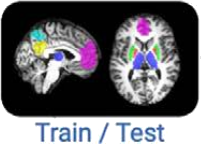
Patients Patients with coma (Glasgow Coma Scale score at hospital admission ≤ 9) of either traumatic or anoxic origin. Neurologic outcome was assessed at 3 months using the Coma Recovery Scale-Revised. Whole-brain advanced structural MRI data were analyzed, along with resting-state functional connectivity of networks known to contribute to conscious processing. A specifically designed ensemble of explainable ML methods was applied and cross-validated.
Interventions None.
Measurements and Main Results A total of 64 patients with coma due to traumatic (n = 26) or anoxic (n = 38) brain injuries were studied and compared with 55 controls. The median delay between ICU admission and MRI acquisition was 9 days (interquartile range, 6–16 days). At 3 months, 50% of patients (32/64) had an unfavorable outcome. All models demonstrated strong generalization capacity: coma diagnosis (mean accuracy 93.4%), discrimination of primary brain injury (mean accuracy 76.2%), and prediction of neurologic outcome (mean accuracy 82.4%).
Conclusions A novel ensemble of brain MRI-derived metrics was specifically associated with coma state, its etiology, and patients’ recovery potential at 3 months. Structural and functional integrity of the mesocircuit and frontoparietal networks appeared to carry the most relevant information.